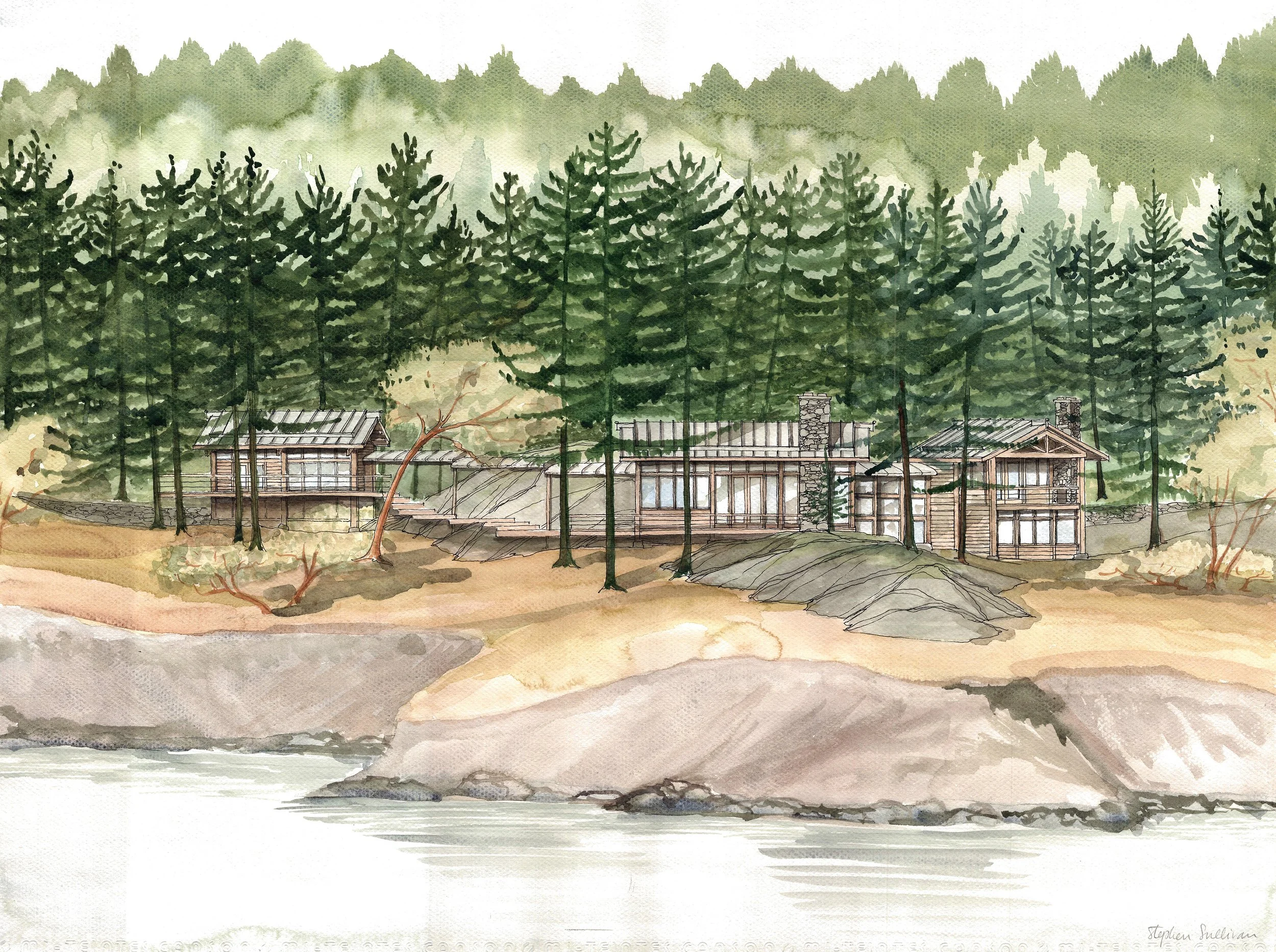
The Studio
Over thirty years ago, I began an architectural firm so I could practice architecture as an art, one that celebrates craftsmanship. After working as an architect for several years, my earlier training as a ceramic artist in Japan eventually compelled me to see architecture as more than engineering or the mere styling of structures. I came to see building design, instead, as a sculptural problem, one that involved working with forms in space, and a matter of choosing materials with an artist’s eye—the right material in the right place.
Many architects develop a style that they apply to projects time and again, and by which they come to be known. While my work refers to historical styles like Neoclassicism and twentieth-century Modernism, any stylistic references serve as components, not strictures, in my exploring architectural expressiveness. With my buildings, I want to evoke emotions that facilitate human thriving.
I approach design as a collaboration with clients because clients’ ideas open design possibilities I could never envision on my own. As clients’ life stories emerge in this collaborative process, conflict grows between architecture’s typical means of fulfilling clients’ needs and the uniqueness of the client at hand. As this healthy friction unfolds, I deliberately pull back from preconceived notions about suitable structures and allow contradictions to propel the design into a place wholly unanticipated by either the client or me.
My design process is intuitive as well as analytical, solving problems but also investigating the right imagery, historical influence, and sculptural form for a project. While analysis proves indispensable in addressing a building’s spatial systems or a site’s inherent characteristics (solar orientation, views, topographic features, vegetation), only intuition can provide a key message or overall idea that guarantees internal consistency to the design. The resulting structures absorb a great deal of the complexity emerging from this intuitive design process, and the tension between this underlying complexity and overarching unity produce liveliness and grace in the final building.
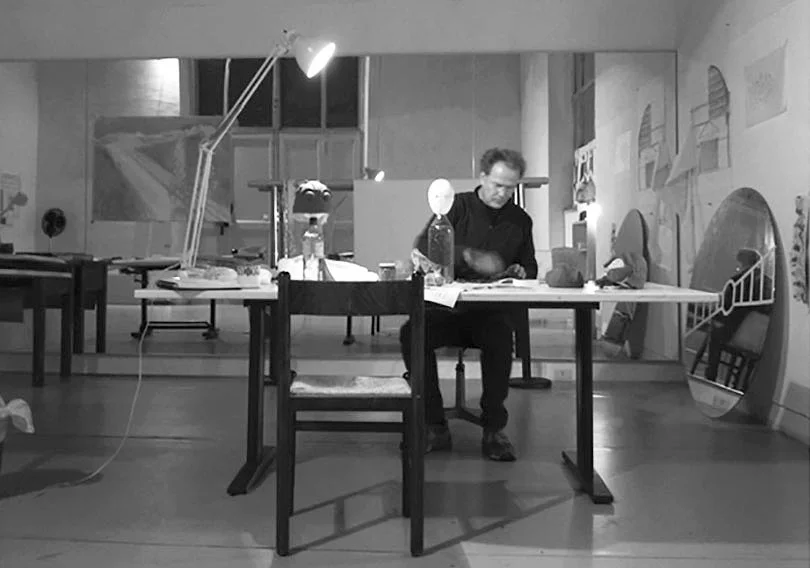
Recognition
2010 | Seattle Design Center Northwest Design Awards—Whole House: Engawa House
2010 | Seattle Design Center Northwest Design Awards—Outdoor Living: Northwest Loggia
2007 | Seattle Homes & Lifestyles magazine: Next 10 Award, Seattle
2004 | Seattle Design Center Northwest Design Award: Honeychurch Antiques
1990 | AIA / Seattle Times Home of Month Award: Lakeview Townhomes
1990 | AIA / Seattle Times Home of Month Award: Bosbyshell Boathouse
1989 | AIA / Seattle Times Home of Month Award: Boyer Twin Houses
1989 | AIA / Sunset Magazine Award of Merit: Boyer Twin Houses
1988 | National Honor Award, The American Wood Council: Loafing Shed
1987 | AIA Honor Awards Portfolio: Merrill Court Residence: Stephen Sullivan / Ibsen Nelson